
When it comes to football training for kids, it is so easy to only think of the physical benefits but football holds so much more, including helping your kid to build social skills. Here, we will look at how our football training at Brazilian Soccer Schools will help your kid to communicate, make friends and much more.
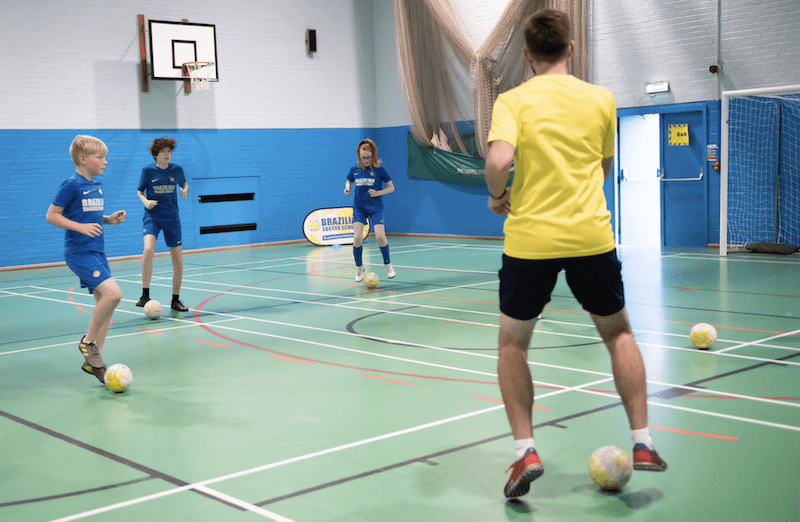
Our football training is much more than practicing skills and perfecting your penalty kick, it is a place where your kid can meet new people and form connections, building their confidence and social skills along the way.
Attending a structured, weekly activity like our football training gives your kid a place where it can feel easier to make friends because they have a common ground with their peers here – football. The social skills they learn with us can help within all facets of their life.
Within this article, we will look at how our football training will help you kid to build excellent social skills.
Find your local football training today
The Team Environment At Football Training For Kids
Football is inherently a team sport, demanding collaboration, communication, and mutual respect. This environment serves as an excellent place for children to learn how to navigate relationships, accept different personalities, and work towards a common goal. Within this section, we will look at how football training will really benefit your kid in social situations.
Learning to Communicate Effectively
Effective communication is perhaps the most immediate social skill developed at football training. Even though at our football training we place a lot of emphasis on individual training and skill, each Brazilian Soccer Schools session ends with a small-sided game so your child will be working in teams with their peers and football requires constant verbal and non-verbal interaction.
Your kid will learn the necessity of clear, concise communication and the BSS coaching methodology fosters this, encouraging players to talk to one another, ask for help, and offer support. They learn how to speak to different people: how to encourage a teammate who is struggling, how to calmly request the ball, and how to accept instruction from a coach. These foundational communication skills translate directly into better classroom participation and more confident interactions throughout their life.
Cooperation and Collaboration
Football demands cooperation. No single player can win the game alone. Our football training instills the understanding that success hinges on collective effort. Your kid will learn to recognise their role within the team structure and understand how their individual actions impact the whole. This constant need to collaborate on drills, offensive plays, and defensive maneuvers cultivates a profound appreciation for teamwork.
This spirit of collaboration is invaluable in group projects at school and throughout their life as their head of to university and/or onto work, whether this is playing football or not.
Handling Conflict and Disagreement
Disagreements are inevitable, especially when emotions run high during a game or competitive drills. Our football training is a safe space for your kid to learn how to handle conflict constructively.
Our coaches will mediate minor disputes, teaching children to verbalise their feelings respectfully, how to compromise and see the other person’s perspective. This ability to manage conflict, apologise, and maintain relationships despite differences is a sophisticated social skill that is crucial for sustained success in peer groups and throughout their life.
Developing Emotional Intelligence and Empathy
Social skills are intrinsically linked to emotional intelligence (EQ). Our football training will help the development of their EQ by placing children in situations that challenge their emotions and require them to consider the feelings of others. Within this section, we will dive deeper into how our training will help.
Managing Frustration and Resilience
Learning a new skill, losing a tough match, or making a mistake in front of the team can be deeply frustrating for a child. Our coaches will guide players through these emotional challenges, teaching them healthy coping mechanisms. They learn to process frustration without giving up or lashing out, thereby building resilience. This emotional regulation is a hallmark of maturity and helps children stay focused on their goals even when facing difficulties.
Empathy and Understanding
A good teammate possesses empathy. They understand when another player needs encouragement, when they are feeling nervous, or when they are struggling physically. By training alongside children from diverse backgrounds and with varying skill levels, your kid will develop a broader perspective. They will learn to celebrate a teammate’s success as if it were their own and offer genuine support during times of failure. This cultivated empathy makes them better friends, more inclusive classmates, and, eventually, more compassionate leaders and colleagues.
Essential Life Skills Learned Through Football Training For Kids
Beyond the direct team interactions, the structure and demands of consistent football training impart several essential life skills that have significant social implications. Within this section, we will look at some of the essential skills learned through football training.
Respect for Authority and Rules
Football operates under a defined set of rules and requires respect for the coach, the referee, and the opposition. Our football training is structured to instill this discipline from an early age. Children learn that rules ensure fairness and safety, and that adhering to their coach is necessary for a functioning environment. This early grounding in respect for authority makes for a smoother transition into structured school settings and within the working world.
Accountability and Responsibility
Every player is accountable for their effort, attendance, and preparation. Missing training affects the entire team. Our football training fosters a sense of personal responsibility. When a child is consistently late or unprepared, they quickly learn the social consequences of letting their teammates down. This sense of duty and accountability transfers seamlessly to academic responsibilities, such as meeting deadlines for school assignments, and within the working world.
Handling Success and Failure Gracefully
Winning and losing are integral parts of sport, and our training provides a valuable stage for learning how to handle both with grace. Your kid will be taught how to be humble in victory and gracious in defeat. Celebrating wildly or gloating after a win can alienate others, just as sulking or blaming teammates after a loss can hurt the entire team, not to mention hurt the person who is being blamed.
Learning to offer a handshake to the opposition, regardless of the result, is a potent social lesson in sportsmanship. This ability to accept both positive and negative outcomes will help them throughout their life.
Ready To Bring Your Child To Our Football Training For Kids?
Football training is an excellent way to get your kid active but it holds so many more benefits, one of which is helping them to build good social skills. Coming to class each week, meeting their peers, playing in small-sided games will all help them to develop empathy and learn how to work with others as part of a team. They will learn how to manage their emotions and see their challenges as lessons not failure.
Our football training will help them build social skills that will help them throughout their life.